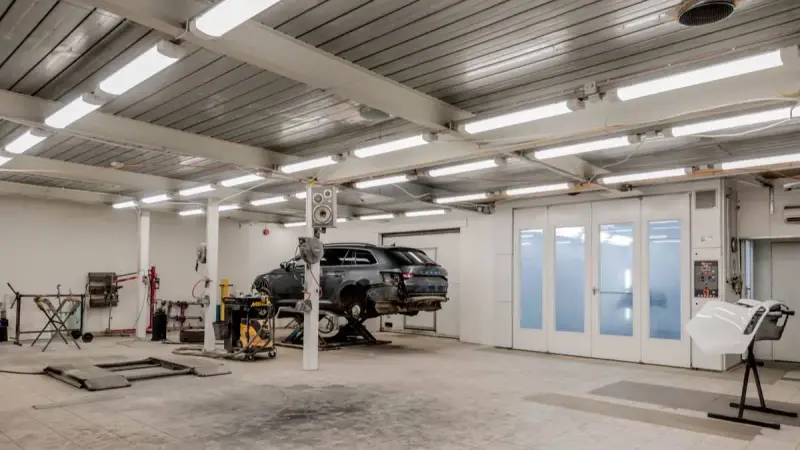
Laredo Elite Epoxy Flooring: Warehouse, Truck Shop, Commercial & Garage Floor Coatings
Border-town floors take forklifts, diesel, caliche dust and 105-degree slab temperatures. We test the slab, grind it properly, and build a system that survives the traffic. Free estimates across Webb County.
- ✓Licensed & Insured
- ✓Warehouse & Industrial Systems
- ✓Night & Weekend Crews
- ✓Se Habla Español
Laredo Elite Epoxy Flooring is an insured epoxy flooring contractor with over 15 years of experience installing resinous and polished floors for residential and commercial properties in Laredo, TX.
Our work covers garage floor epoxy, decorative flake and chip systems, metallic epoxy, solid color epoxy coatings, polyaspartic and polyurea topcoats, urethane cement for wash-down and hot-sanitation areas, quartz broadcast systems, ESD and anti-static flooring, chemical-resistant and novolac coatings, warehouse and distribution floors, commercial kitchen flooring, showroom and retail floors, medical and cleanroom systems, diamond grinding and shot blasting, moisture vapor mitigation, mechanically polished concrete, floor repair and crack filling, OSHA line striping and safety marking, and patio and pool deck coatings.
Every system gets specified against what actually happens on the floor rather than what looks good in a brochure.
That means a truck bay off Mines Road gets film build, polyurea joint fill and diesel resistance, a tortillería gets urethane cement because hot sanitation shears epoxy off a slab, and a garage in north Laredo gets a 100% solids epoxy base at ten to twenty mils with a UV-stable polyaspartic on top so hot tire pickup never starts.
We grind or shot blast to an ICRI surface profile instead of acid etching, we test slab moisture to ASTM F1869 and ASTM F2170 before we quote, and we watch slab temperature rather than air temperature so a material with a 20-minute pot life is not fighting us in July.
Insured and bonded, written workmanship warranty on every installation, and se habla español.
Why Laredo Chooses Laredo Elite Epoxy Flooring
- ✓Over 15 years of warehouse, truck shop and garage floor work across Webb County
- ✓Slab moisture tested to ASTM F1869 and ASTM F2170 before we quote, not after a failure
- ✓Diamond grinding and shot blasting to a measured ICRI profile, never an acid etch
- ✓Semi-rigid polyurea joint filling so hard-wheel traffic stops eating your control joints
- ✓Phased night and weekend installs so a distribution building never stops receiving
- ✓UV-stable polyaspartic topcoats specified for open bay doors and Laredo sun
- ✓Se habla español en todas las visitas y presupuestos
About Laredo Elite Epoxy Flooring in Laredo, TX
Laredo Elite Epoxy Flooring has spent over 15 years installing resinous and polished concrete floors in Laredo and across Webb County, and the mix of work here is different from almost anywhere else in Texas. This city sits on the busiest inland port in the United States.
Freight crossing the World Trade Bridge and the Colombia Solidarity Bridge fills the buildings along Mines Road, Killam Industrial Boulevard and Bob Bullock Loop, and those buildings run cross-docks, transload operations, bonded warehouses, forwarder yards and truck and trailer shops.
Their floors take hard-wheeled lift trucks, steel pallet jacks, trailer landing gear, diesel, DEF and battery acid, and they cannot close for a week to be coated.
So we build around the traffic instead of around our own schedule. We phase warehouse work section by section, install overnight and across weekends, and use fast-cure chemistry where a return-to-service time has to be counted in hours.
On the residential side, most of what we do is garage flake and polyaspartic systems in north Laredo and out toward Loop 20, where the specific enemies are hot tire pickup, oil staining and the fine alkaline caliche dust that blows in off every unpaved yard in the county and that will kill a coating bond if nobody grinds it off first.
The technical discipline is the same on both.
We grind or shot blast to a measured ICRI surface profile rather than acid etching, we test slab moisture to ASTM F1869 and ASTM F2170 before quoting rather than after a failure, we fill control joints full-depth with semi-rigid polyurea, and we watch slab surface temperature in summer because a July slab can cut a polyaspartic's working time in half.
We are licensed, insured and bonded, we back every installation with a written workmanship warranty, and se habla español, which in a city where more than 95 percent of residents are Hispanic is not a marketing line but the language most of our job walks actually happen in.
Epoxy Flooring Work We Do in Laredo

Garage Floor Coatings
Nobody in Laredo winterizes a garage, and that changes what a garage floor actually has to survive. There is no road salt here, no freeze-thaw scaling at the apron, and a hard freeze is a once-a-decade event rather than a design case.

Flake & Chip Epoxy Systems
Flake and chip epoxy is the most popular floor we install in Laredo, and the reason is unglamorous: it hides things. A broadcast of vinyl chips scattered into a wet 100% solids base coat breaks up the surface visually, which means old patch lines, trowel swirls, saw-cut joints and the general unevenness of a slab poured in 1994 stop being the first thing your eye lands on.
Metallic Epoxy Floors
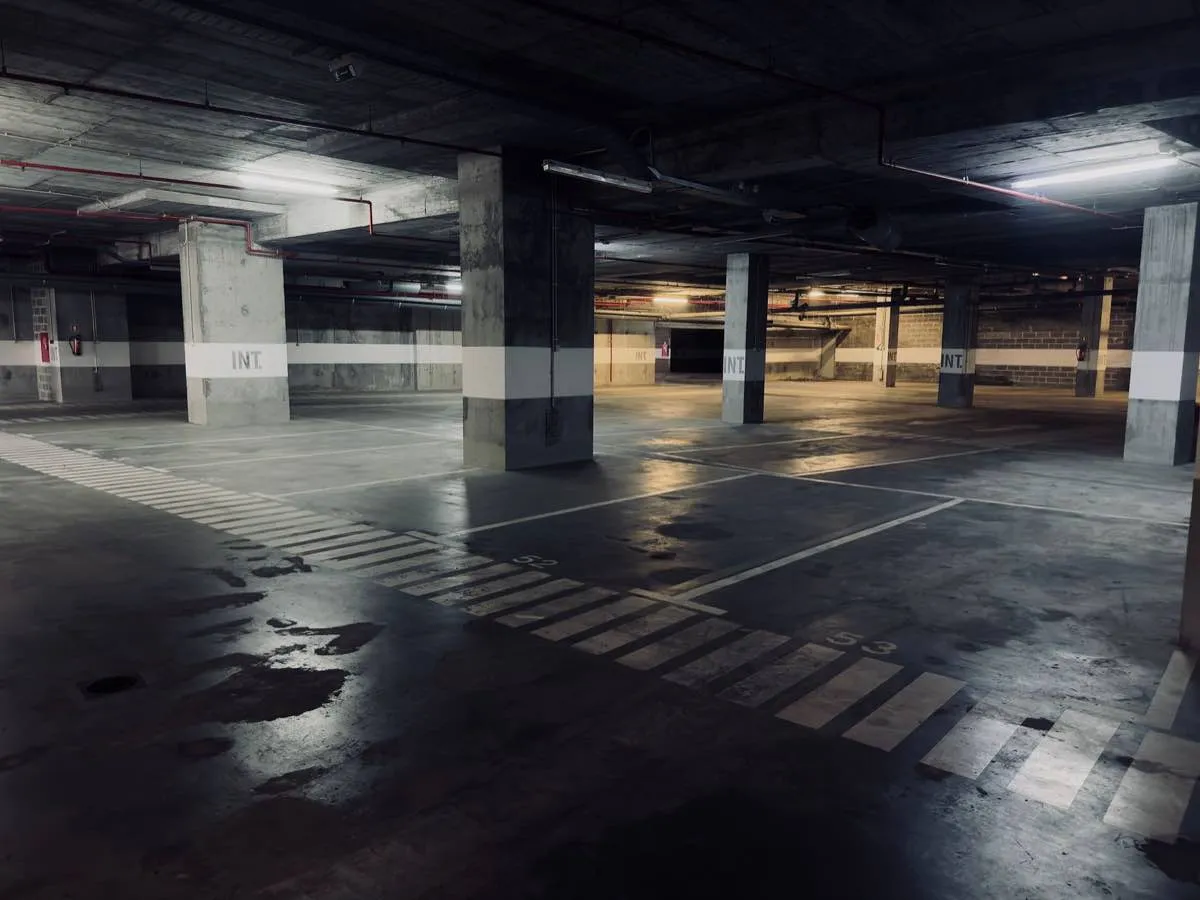
Metallic epoxy is the floor people photograph. Fine metallic pigment is dispersed into a clear 100% solids epoxy, poured, and then moved with a squeegee, a roller, a brush and sometimes a heat gun until the pigment separates into veins, cells and pearl-like drifts that read as marble or poured stone.
Polyaspartic Coatings
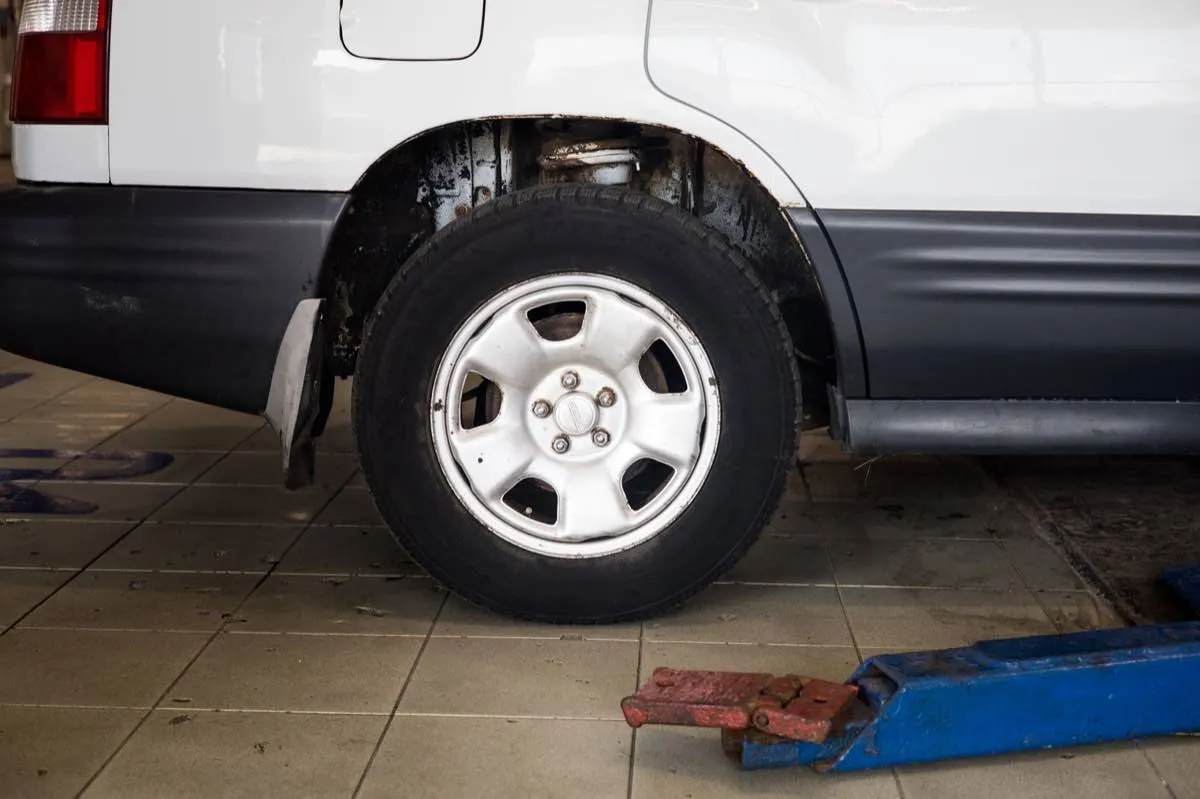
Most people buy polyaspartic for a calendar reason rather than a performance one, and in Laredo that reason is usually a building that cannot stop. Freight crosses at the bridges around the clock, a produce repack room has a season, and a dealership service lane that is dark on Monday is losing money on Monday.
Solid Color Epoxy Coatings
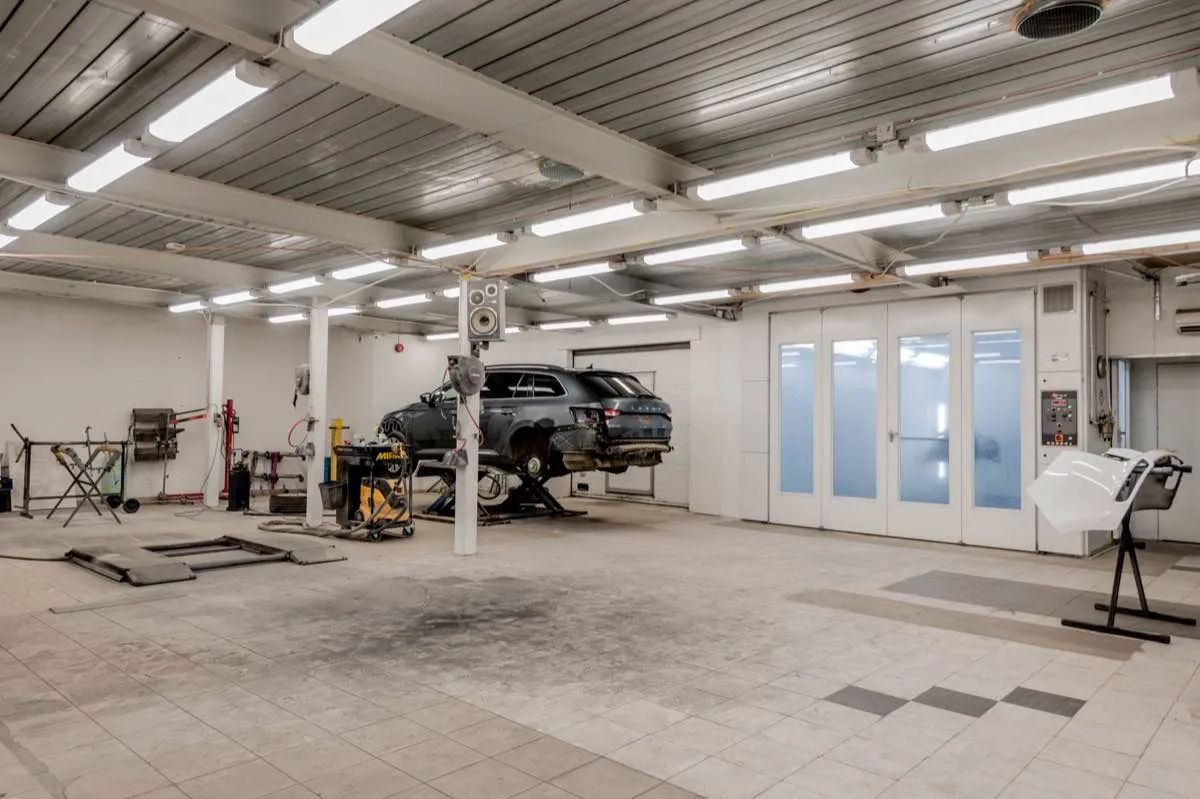
Solid color is the least forgiving system we install, which makes it the honest test of whether a contractor reads Laredo weather or just the calendar. There is no flake pattern to break up the surface and no metallic movement to pull the eye around, so every lap line, every haze and every weak spot in the bond shows from the doorway.
Commercial Epoxy Flooring
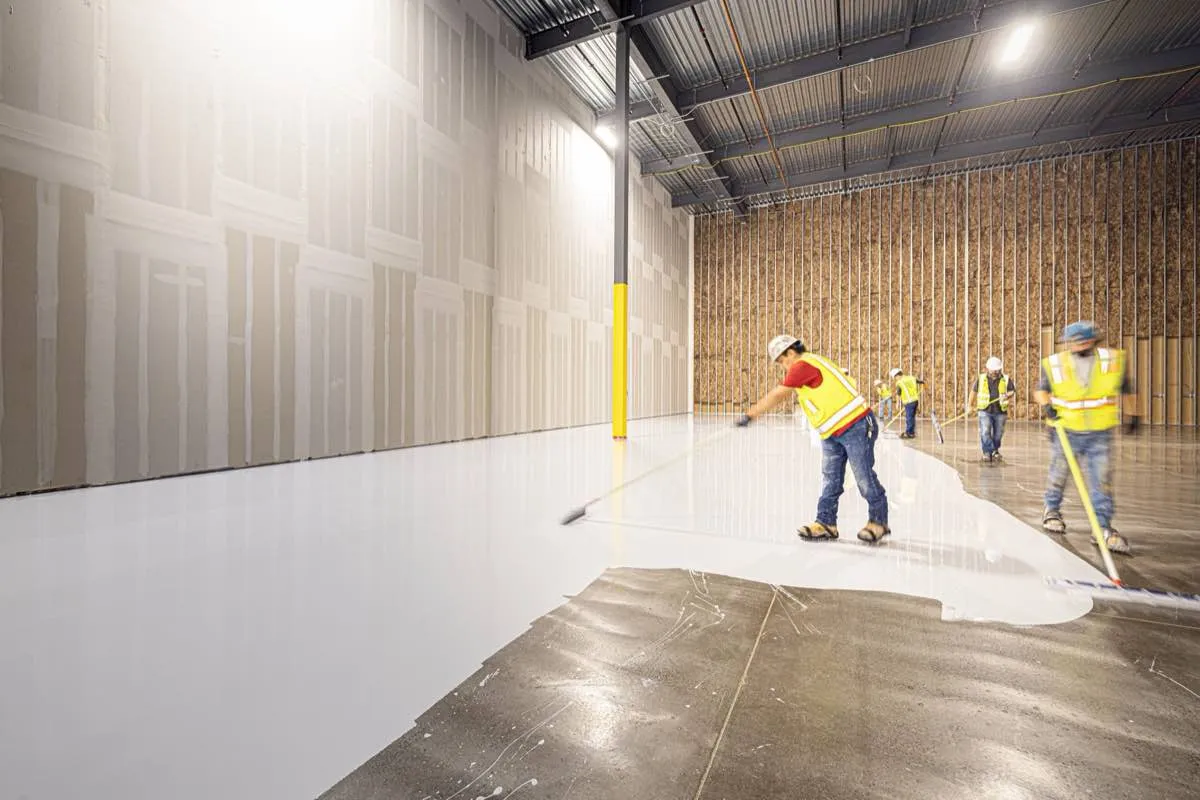
Commercial floor work in Laredo is governed less by the material than by the lease. Tenant spaces along McPherson and Del Mar turn over between customs brokers, freight forwarders, clinics, insurance offices, gyms and churches, and the flooring contractor is almost always the last trade standing between a build-out and a final inspection.
Warehouse & Industrial Coatings
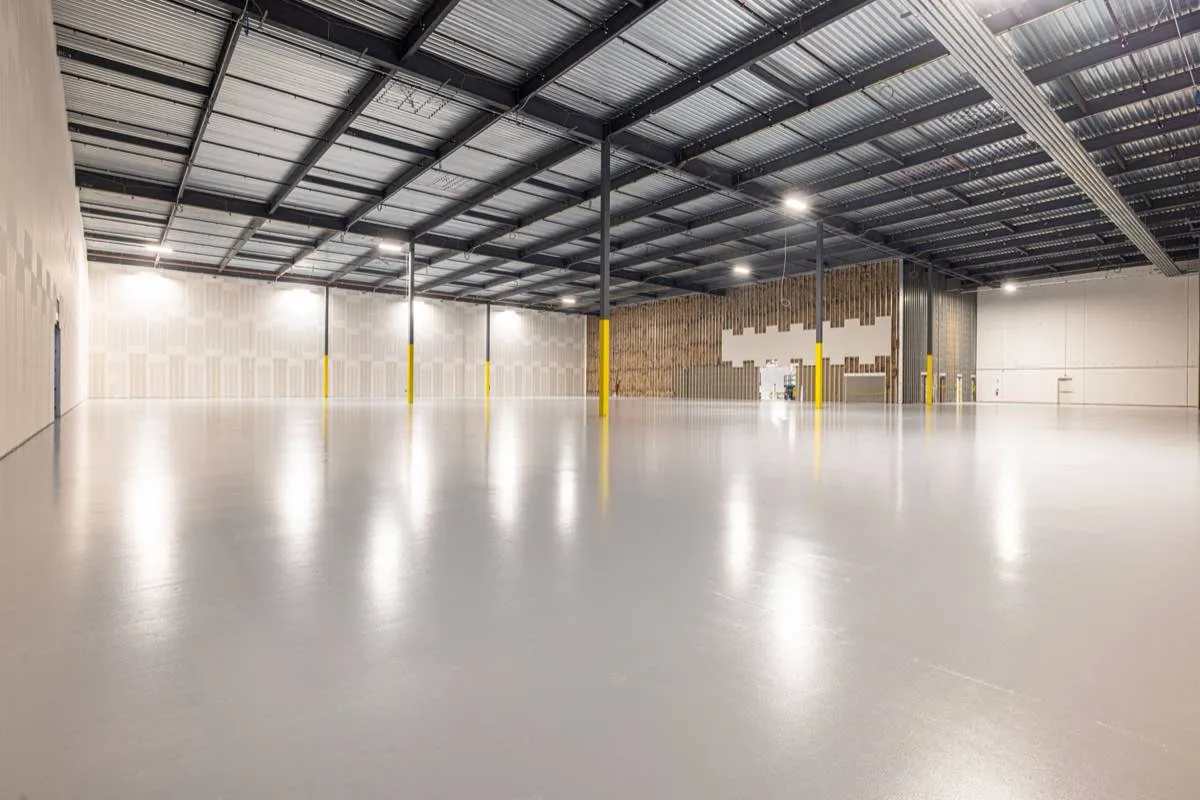
Warehouse and industrial floor coatings are the core of what we do in Laredo, because Laredo is a warehouse town. Trade moving through the World Trade Bridge and the Colombia Solidarity Bridge has filled the north and east sides of this city with cross-dock buildings, transloading facilities, bonded warehouses and forwarder yards, and every one of them runs on a concrete slab that was poured to a schedule and then asked to carry hard-wheeled lift trucks for twenty years.
Urethane Cement Flooring
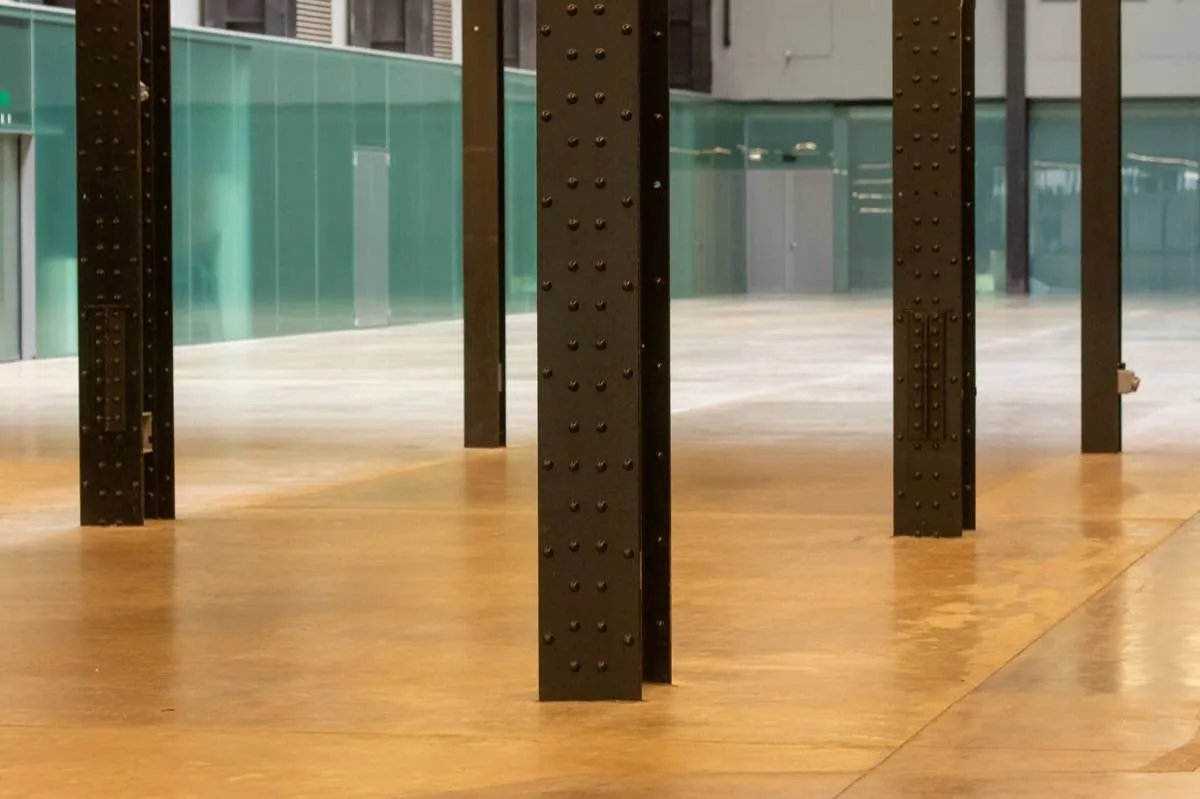
Laredo Elite Epoxy Flooring installs urethane cement for wet process and wash-down floors on the border industrial corridor. Thermal shock from hot wash water on a slab that cooked all afternoon is the failure mode thin epoxy cannot handle for long.
Quartz Broadcast Systems
Nobody buys a floor for slip resistance until somebody falls, and by then the conversation is expensive. Quartz broadcast is the system we specify when a floor will be wet on purpose, repeatedly, in front of employees who are moving fast.

ESD & Anti-Static Flooring
Laredo Elite Epoxy Flooring installs ESD flooring for border logistics, light electronics, and packing cells that need controlled static paths daily. Cross-border warehousing mixes cardboard dust, dry air spells, and heavy cart traffic on long double shifts.
Chemical-Resistant Flooring
The hardest part of specifying a chemical-resistant floor in Laredo is that the chemical list is not stable. A transload building on Mines Road handles resin pellets this quarter and drummed solvent next quarter, because the floor belongs to the building and the cargo belongs to whoever signed the last contract.
Commercial Kitchen Flooring
Start at the drain, because that is where kitchen floors fail and where the inspection actually happens. A floor sink with a coating feathered to its edge, a trench drain with failed grout around the frame, a low spot that holds water three feet from where the slope should have carried it: those are the findings that come up, and they are also the exact places a floor starts lifting.
Showroom & Retail Floor Coatings
Retail flooring in Laredo is scheduled around when a store is allowed to be closed, and in this market that window is narrow. Traffic at Mall del Norte, along San Bernardo and across the retail corridors swells with cross-border shoppers, so the seasons that other cities use for renovation are the seasons here that pay the rent.
Medical & Cleanroom Flooring
There is no such thing as a medical floor, only a medical detail. The field of a resinous floor is the easy part; what gets inspected, and what fails, is every junction where the floor meets something else.
Concrete Grinding & Surface Prep
Surface preparation in Laredo is mostly a dust problem, and dust here is not a nuisance category. Grinding concrete generates respirable crystalline silica, which OSHA regulates directly, so our machines run shrouded and vacuum-assisted with HEPA filtration as a matter of course rather than as an upgrade line on a quote.
Moisture Mitigation Systems
Water reaches a floor from two directions in this climate, and only one of them is fixed with a primer. The familiar one is vapor drive from below.
Concrete Polishing
Polishing is often the right answer for a slab that just failed its moisture test. A coating is a film, and a film can be pushed off by vapor moving up through concrete.
Floor Repair & Crack Filling
A control joint is not a fixed width, and the temperature at which you fill one decides whether the repair holds. Concrete expands as it warms, so a joint is at its tightest when the slab is hottest.
Line Striping & Safety Marking
Laredo Elite Epoxy Flooring lays line striping and safety marking for warehouses that move freight toward and away from the border every single day. Fork paths and staging boxes change when tenants re-slot SKUs across peak seasons and contract shifts.
Patio & Pool Deck Coatings
Patio and pool deck coatings are an outdoor problem with indoor materials, and getting them right in Laredo means respecting two things: the sun and the surface temperature. Standard epoxy has no business on an exposed patio.
Warehouse, Cross-Dock & Truck Shop Floors on the Border
Laredo runs on freight, and freight runs on concrete. The buildings north and east of town along Killam Industrial Boulevard, Mines Road and Bob Bullock Loop move product across the busiest inland port in the country, and their slabs take hard-wheeled lift trucks, steel pallet jacks, trailer landing gear and diesel every day of the week.
We coat cross-dock aprons, bonded and transload warehouses, forwarder yards, truck and trailer maintenance bays, cold rooms and parts departments, and we do it in phases at night and over weekends so receiving never stops. Joint filling comes first, striping comes last, and the slab gets tested before anything is quoted.
- ✓Cross-dock, transload and bonded warehouse floors
- ✓Truck, trailer and fleet maintenance bays
- ✓Semi-rigid polyurea joint filling for hard-wheel traffic
- ✓Chemical-resistant coatings for diesel, DEF and battery acid
- ✓OSHA aisle striping and pedestrian walkway marking
- ✓Phased night and weekend installs around receiving hours
Recent Projects Across the South Texas border region
Full gallery →How It Works
- 1. Walk the floor and test the slab. We ask what drives on it, what gets spilled on it, how it gets cleaned and what your shutdown window looks like. Then we test slab moisture, check the joints and the drains, and find out what is already stuck to the concrete before we put a number on paper.
- 2. Grind or shot blast to profile. Diamond grinding on garages, edges and occupied interiors with HEPA-shrouded equipment, shot blasting on large open warehouse floors. Old coatings, mastic and caliche dust come off mechanically. We do not acid etch, ever.
- 3. Repair, fill joints and prime. Spalls and pop-outs cut back to sound concrete and rebuilt, cracks chased and filled, control joints filled full-depth with semi-rigid polyurea, and a moisture-mitigating primer where the ASTM readings call for one.
- 4. Build the system and hand it back. Base coat, broadcast, and topcoat at the specified thickness with the anti-slip level matched to how the floor is really used. Then striping, a documented cure, and a return-to-service time you can schedule a shift around.
What Laredo Customers Say
They filled every control joint in our cross-dock before they coated anything, which nobody else even quoted. Two years of pallet jacks later and the joint edges are still square. That is the part that used to cost us a saw crew every spring.
Flake floor in the garage, done in a day and a half, and my husband parked on it the next afternoon with no tire marks. They ground it instead of just rolling paint on like the last guy did, and you can tell.
Coated the shop floor and the wash bay. They talked me out of epoxy in the wash bay and put in the urethane mortar instead, which cost more and was clearly the right call once I saw how the hot water hits it.
Drove down for a small clinic job that two Laredo contractors would not even bid because of the distance. Clean containment, no dust in the exam rooms, finished over a weekend and the price was what they said it would be.
Service Areas
Laredo Elite Epoxy Flooring serves Laredo, TX and surrounding communities including:
Frequently Asked Questions
How much does epoxy flooring cost in Laredo?
A standard residential garage flake system generally runs $4 to $8 per square foot installed, so most two-car garages land between $2,400 and $4,500. Solid color commercial coatings run $3 to $6, metallic runs $8 to $14, quartz broadcast $7 to $12, and troweled urethane cement $10 to $16 because it is a mortar rather than a coating.
Prep drives the spread more than the topcoat does: a slab with an old failed coating, bad joints and high moisture readings costs more to prepare than a clean five-year-old slab, and that difference shows up in the bid.
How long does an epoxy floor last in this climate?
A properly prepared residential garage floor with a polyaspartic topcoat should give you 15 to 20 years before it needs a recoat rather than a replacement. A warehouse floor under constant lift-truck traffic is more like 7 to 12 years in the drive lanes and much longer in the racking. The variable that matters is prep, not brand.
Floors that fail early almost always failed at the bond line because somebody skipped the grinding, skipped the moisture test, or coated over caliche dust.
Why do epoxy floors peel in Laredo warehouses?
Three reasons, in order of frequency. Moisture vapor pushing up through a slab with no working vapor retarder, which lifts the coating in blisters and sheets. Inadequate preparation, usually an acid etch or a quick sweep instead of a real mechanical profile.
And thermal shock, where hot water or steam cleaning makes an epoxy expand about three times as much as the concrete under it and shear its own bond. We test for the first, refuse to skip the second, and specify urethane cement where the third applies.
Can you coat a floor without shutting the building down?
Usually, yes. We work in phases, section by section, with containment and clear traffic routing so receiving, production or a service department keeps running. Fast-cure polyaspartic lets us hand back a section that can take foot traffic the same evening and vehicles the next morning. Nights and weekends are normal scheduling for us. What we cannot do is compress the cure of a troweled urethane cement floor, so wash-down rooms need a real shutdown window.
Is polyaspartic actually better than epoxy?
Better at some things, worse at others. Polyaspartic is UV stable so it will not yellow near an open bay door or a storefront window, it cures fast enough for a one-day floor, and it handles a wider temperature range.
But it is thin per coat and has a pot life measured in minutes, so it is a poor choice for building thickness over a rough slab. The best system for most Laredo projects is both: a 100% solids epoxy base for build and adhesion, then two polyaspartic coats on top.
Do you work outside Laredo?
Yes. We cover Webb County and the towns along the corridor — Rio Bravo, El Cenizo, Zapata, Hebbronville, Cotulla, Encinal, Dilley, Freer and Carrizo Springs among them — and we travel for commercial and industrial work in the smaller communities where nobody else will show up. Mileage is factored into the estimate up front rather than added afterward, and a job far enough out usually gets scheduled as a single continuous push instead of split across weeks.